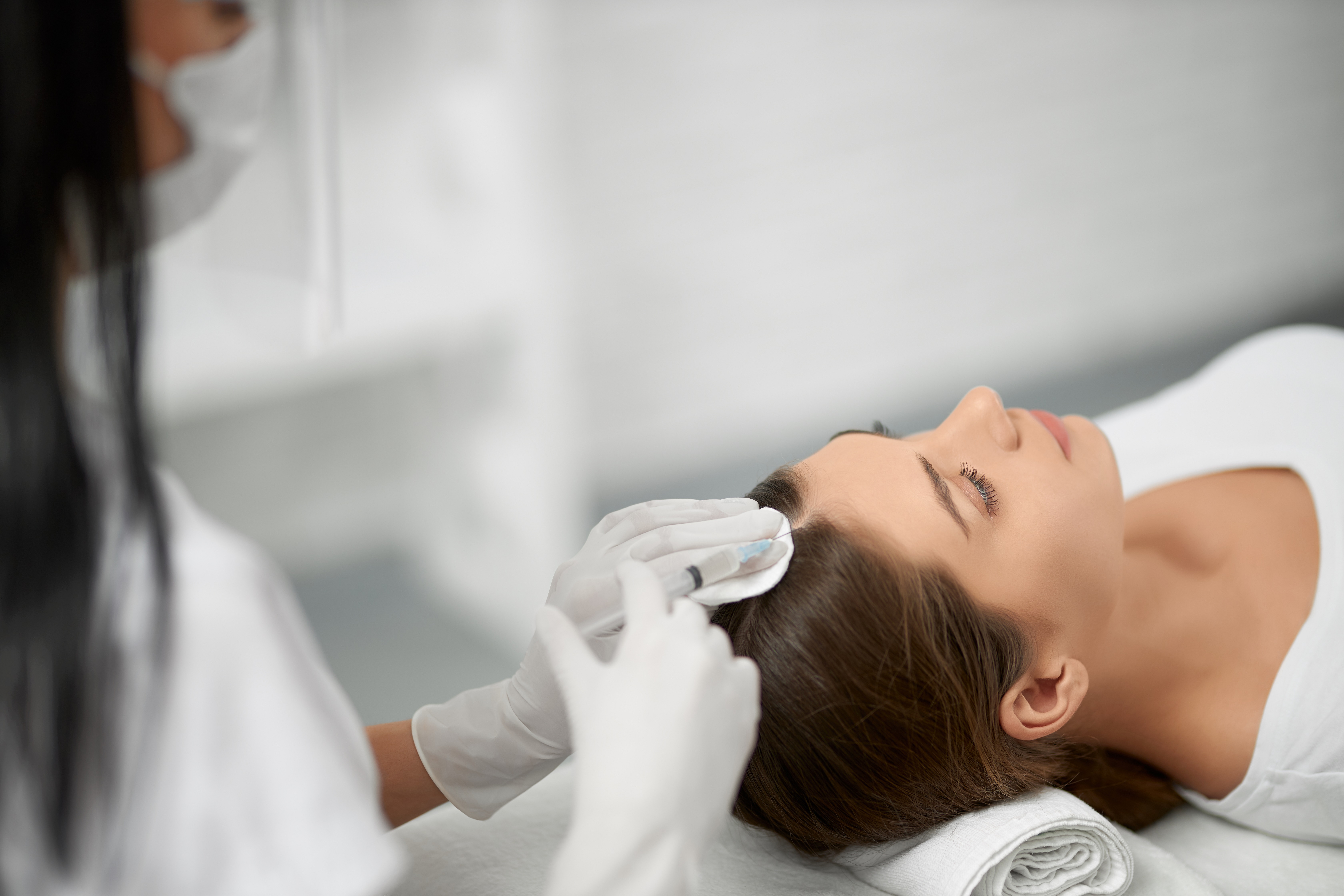
Hair transplant surgery has undergone a revolution in the last decade. What was once a procedure associated with "hair plug" scarring and unnatural-looking results has evolved into a highly refined, minimally invasive technique that delivers permanent, natural-looking hair restoration — transforming the lives of thousands of people dealing with significant hair loss.
At Dermessence Clinic, Sector 16D Chandigarh, Dr. Sukhmani Brar Jugpal performs FUE (Follicular Unit Extraction) hair transplants — the gold standard in modern hair restoration. This comprehensive guide covers everything you need to know before making this important decision.
What is a Hair Transplant?
A hair transplant is a surgical procedure that moves hair follicles from a genetically resistant "donor area" (typically the back and sides of the scalp, where DHT-resistant follicles grow) to the "recipient area" (the bald or thinning zones). Since the transplanted follicles retain their original genetic programming, they continue to grow permanently in their new location.
The key insight: hair follicles from the back of the scalp are genetically programmed to be resistant to DHT (dihydrotestosterone) — the hormone responsible for pattern hair loss. When transplanted to the front or crown, they retain this resistance and continue growing for life.
FUE vs FUT: Understanding the Difference
FUE (Follicular Unit Extraction) — Modern Gold Standard
In FUE, individual follicular units (containing 1–4 hairs each) are extracted one by one from the donor area using a micro-punch instrument (0.6–0.9mm diameter). These are then carefully implanted into tiny incisions in the recipient area.
Advantages of FUE:
- No linear scar — only tiny circular scars that are invisible with short hair (even a buzz cut)
- Faster recovery — return to work in 5–7 days
- Less post-operative discomfort
- Can harvest from beard or chest if scalp donor is limited
- Superior to FUT for patients who prefer short hairstyles
FUT (Follicular Unit Transplantation) — Strip Method
A strip of skin is surgically removed from the donor area, the follicular units are dissected under microscope, then implanted. Leaves a linear scar at the back of the head.
When FUT may be preferred: Very large sessions requiring 3,000+ grafts in a single sitting; patients who will always wear hair longer (covering the scar). At Dermessence, we primarily perform FUE.
Am I a Good Candidate for Hair Transplant?
Not everyone with hair loss is suitable for hair transplant. A thorough evaluation is essential. Ideal candidates:
Good Candidates
- Stable hair loss: Pattern hair loss should be stable (not actively progressing rapidly) for at least 1–2 years. If you're still losing aggressively, new areas may thin after the transplant, requiring further surgery.
- Adequate donor density: Sufficient hair follicles in the donor area (back/sides of scalp). Evaluated by dermatoscopy and hair count.
- Age 25+: Earlier transplants in very young men risk needing revision as loss continues. We typically recommend starting with medical therapy first (minoxidil, finasteride) and reassessing.
- Realistic expectations: A hair transplant provides coverage and natural appearance — not your original teenage hairline density.
- Overall good health: No uncontrolled diabetes, blood disorders, or immune conditions.
- Non-smoker or willing to quit: Smoking significantly impairs graft survival.
Not Suitable Candidates
- Active telogen effluvium (sudden widespread shedding) — surgery during active shedding gives poor results
- Alopecia areata — hair transplant is not effective as the immune attack will destroy transplanted follicles too
- Insufficient donor hair (very advanced pattern loss with limited donor area)
- Patients with unrealistic expectations of achieving their 18-year-old hairline
- Uncontrolled medical conditions (diabetes, bleeding disorders)

The FUE Hair Transplant Procedure at Dermessence
Step 1: Pre-Operative Consultation
A detailed evaluation including: trichoscopy (scalp camera examination), hair count, donor density assessment, norwood classification of hair loss, blood tests, and treatment goal discussion. Dr. Sukhmani designs a custom hairline and coverage plan based on your unique facial structure and available donor hair.
Step 2: Day of Procedure
- Preparation: Donor and recipient areas shaved; local anaesthesia administered (tumescent technique for comfort)
- Extraction: Individual follicular units extracted from donor area using FUE motorised punch. Typically 1,500–3,500 grafts per session.
- Graft sorting: Extracted grafts are sorted by size (1-hair, 2-hair, 3-hair, 4-hair units) and kept in storage solution
- Site creation: Tiny incisions made in the recipient area — angle, direction, and density designed to match natural hair growth pattern
- Implantation: Grafts carefully placed in each site using implanter pens or forceps
- Duration: 6–10 hours depending on graft count. Breaks provided.
Step 3: Post-Operative Period
- Day 1–3: Swelling on forehead (normal — resolves by day 3). Scabs form on recipient area. Prescribed antibiotic, anti-inflammatory, and pain medications.
- Day 7–10: First wash of transplanted area (gentle). Scabs fall off naturally.
- Day 14: Most donor area healed. Return to work possible for desk jobs from day 5–7.
- Week 3–6: Transplanted hairs shed (shock loss) — this is NORMAL and expected. The follicle roots remain alive.
- Month 3–4: New hair growth begins — initially thin and fine
- Month 6–9: Significant hair growth visible — thickens progressively
- Month 12–18: Final, mature result. Full density and natural appearance.
Hair Transplant Cost in Chandigarh
Cost in Chandigarh is calculated per graft (follicular unit). The number of grafts needed depends on the extent of hair loss and the coverage area.
| Hair Loss Extent | Grafts Needed | Approximate Cost |
|---|---|---|
| Mild (hairline recession) | 1,000–1,500 grafts | ₹35,000–₹60,000 |
| Moderate (crown + hairline) | 1,500–2,500 grafts | ₹60,000–₹90,000 |
| Advanced (Norwood 4–5) | 2,500–3,500 grafts | ₹90,000–₹1,20,000 |
| Beard/Moustache Transplant | 500–1,500 grafts | ₹25,000–₹60,000 |
| Eyebrow Transplant | 200–400 grafts per brow | ₹20,000–₹40,000 |
Important: Be extremely cautious of clinics offering very low prices (₹15–25 per graft) — graft survival depends critically on extraction technique, storage time, and implantation speed. Poor handling kills grafts before they're implanted, wasting both your money and your limited donor hair.
Hair Transplant — Before and After: Realistic Expectations
A well-performed FUE hair transplant at Dermessence delivers:
- Natural hairline design — customised to your facial proportions and age
- 80–95% graft survival rate (compared to industry average of 60–70% in low-quality centres)
- Permanent results — transplanted hair grows for life
- Natural appearance — people cannot tell you've had a hair transplant
- Improved confidence — the psychological benefit is significant
Realistic limitations:
- Cannot replace original teenage density — available grafts are finite
- Native hair may continue to thin after transplant — medical therapy (minoxidil) helps preserve non-transplanted hair
- Results take 12–18 months to be fully visible — patience is essential
Combining Hair Transplant with Medical Therapy
At Dermessence, we always recommend combining hair transplant with:
- Minoxidil 5% (topical) — to strengthen and preserve existing native hair, improving overall density
- Finasteride or Dutasteride (oral) — for men with androgenetic hair loss, to slow/stop ongoing loss in non-transplanted areas
- GFC sessions (3–4/year) — to maintain transplanted and native hair health long-term
- Nutritional optimisation — iron, vitamin D, zinc levels checked and corrected
Hair Transplant FAQs
Is hair transplant painful?
The procedure is done under local anaesthesia — you will feel only mild pressure or vibration. Post-procedure discomfort is minimal and managed with prescribed medications.
Will the scar be visible after FUE?
FUE leaves tiny circular punch marks (1mm) scattered in the donor area — invisible once hair grows back even 1 cm. A buzz cut is possible after FUE (not possible with FUT strip scar).
When can I go back to work?
Office/desk work: 5–7 days. Physical or outdoor work: 2–3 weeks.
Do I need to repeat the transplant?
If you achieve full coverage of your target area with sufficient grafts, a second transplant may not be needed for many years (or ever). However, ongoing native hair loss may create new bare areas over time — requiring either medical therapy or a second session years later.
Related Articles:
→ Hair Transplant Chandigarh
→ Hair Loss Treatment Options
→ Hair Regrowth Treatment
→ Best Hair Loss Clinic Chandigarh
Book a Consultation Today
Get expert dermatology care at Chandigarh's most-trusted skin clinic.
📞 +91-8847491254