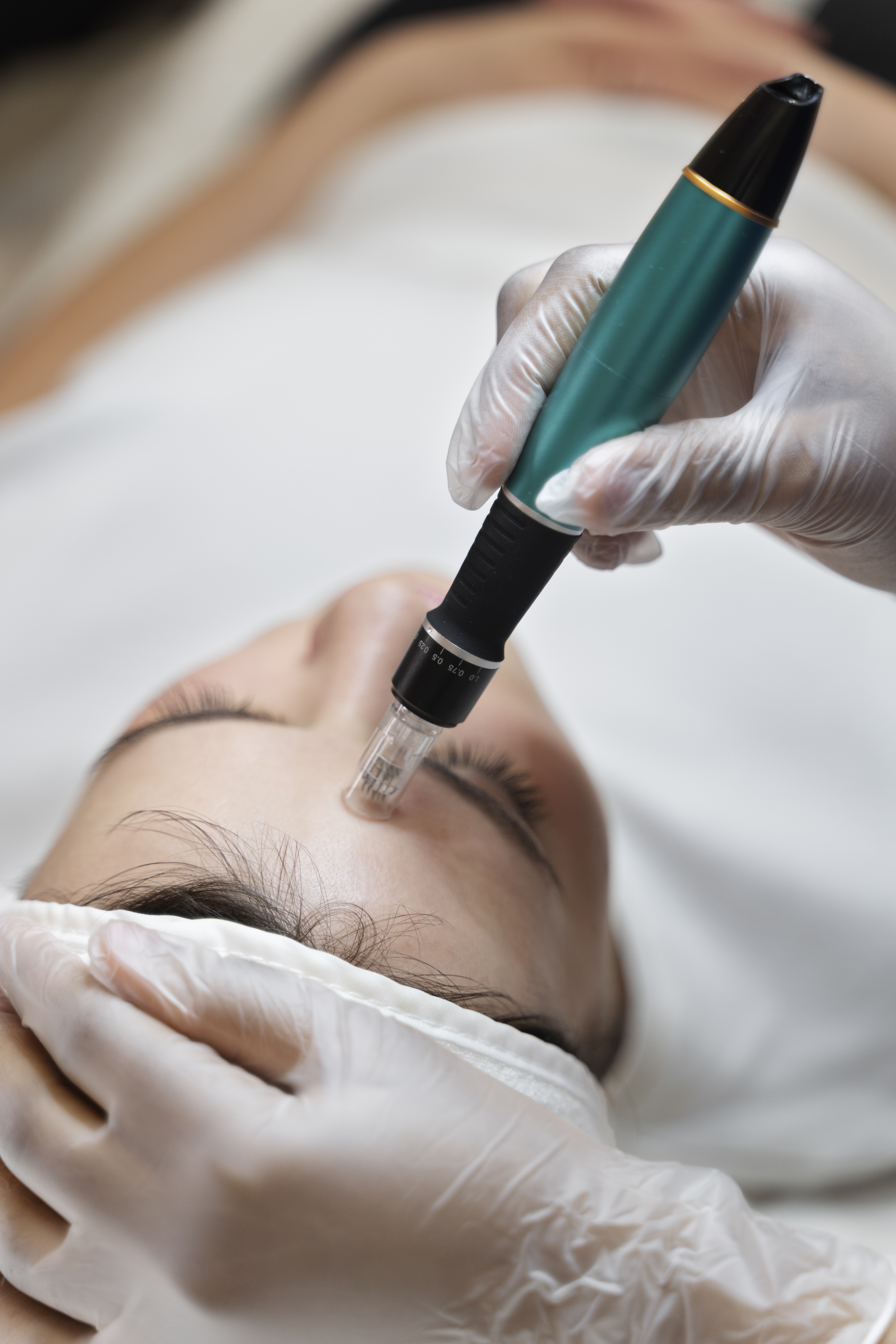
Acne scars are the lasting emotional and physical legacy of acne — and for many people, they cause more psychological distress than the acne itself. The red marks, pitted depressions, and rough texture left by severe acne can persist for years and affect confidence, self-image, and social interactions in profound ways.
The good news: modern dermatology has an impressive arsenal of treatments that can deliver 50–80% improvement in acne scar appearance — a dramatic, often life-changing transformation. The key is choosing the right treatment for the right scar type — because not all acne scars are the same, and not all treatments work for all scar types.
This comprehensive guide by Dr. Sukhmani Brar Jugpal, MD Dermatology at Dermessence Clinic, Sector 16D Chandigarh gives you the complete picture of acne scar types and their optimal treatments.
Understanding How Acne Scars Form
Not all acne causes scars. Scars form when acne inflammation is deep and severe enough to damage the dermis (the structural layer of skin below the epidermis). This damage disrupts the normal healing process:
- Too little collagen produced during healing → atrophic (depressed/pitted) scars — the most common type
- Too much collagen produced → hypertrophic scars (raised) or keloids
- Melanin overproduction during healing → Post-Inflammatory Hyperpigmentation (PIH) — flat dark marks (technically not scars, but commonly confused with them)
Types of Acne Scars: Detailed Classification
Atrophic Scars (Depressed)
1. Icepick Scars
- Appearance: Deep, narrow pits — like being punctured by an ice pick. Diameter <2mm but depth can reach the deep dermis.
- Mechanism: Severe inflammatory acne destroying follicle tissue, creating a narrow channel that heals with a pit
- Prevalence: About 60–70% of atrophic acne scars
- Treatment difficulty: The HARDEST to treat — narrow channel doesn't fill easily with collagen stimulation treatments
- Best treatments: TCA Cross, punch excision
2. Boxcar Scars
- Appearance: Round or oval depressions with sharp, well-defined vertical edges. Width: 1.5–4mm.
- Mechanism: Inflammatory destruction of collagen fibres, leaving a defined depression with intact walls
- Treatment: Microneedling, RF microneedling, subcision, CO2 laser
3. Rolling Scars
- Appearance: Wave-like undulations and gentle depressions over a broad area of skin — give skin a "bumpy" or uneven landscape appearance
- Mechanism: Fibrous adhesions beneath the skin surface anchor the epidermis downward — creating the rolling contour
- Best treatments: Subcision (to cut the fibrous bands) + microneedling, filler
Hypertrophic Scars and Keloids (Raised)
- Hypertrophic: Raised, thickened scars that remain within the original wound boundary. More common on the chest, back, and shoulders. More common in South Asian skin.
- Keloid: Raised, thick scars that extend beyond the original wound boundary — may be itchy or painful. Genetically determined. Treatment is challenging and recurrence is common.
- Treatment: Intralesional corticosteroid injections, silicone sheets, laser resurfacing, surgery (high recurrence risk for keloids)
Post-Inflammatory Hyperpigmentation (PIH)
Flat, dark brown or red-pink marks left after acne heals. Not true scars — no structural change in the dermis. More common and darker in South Asian skin types. Respond well to topical treatments and laser.
Important distinction: Most patients come to Dermessence calling everything "scars" — including PIH (flat dark marks). These require very different treatments and have much better prognoses than true atrophic scars. A proper clinical assessment is essential before any treatment begins.
Acne Scar Treatments: Comprehensive Guide
1. Microneedling (Dermapen / CIT)
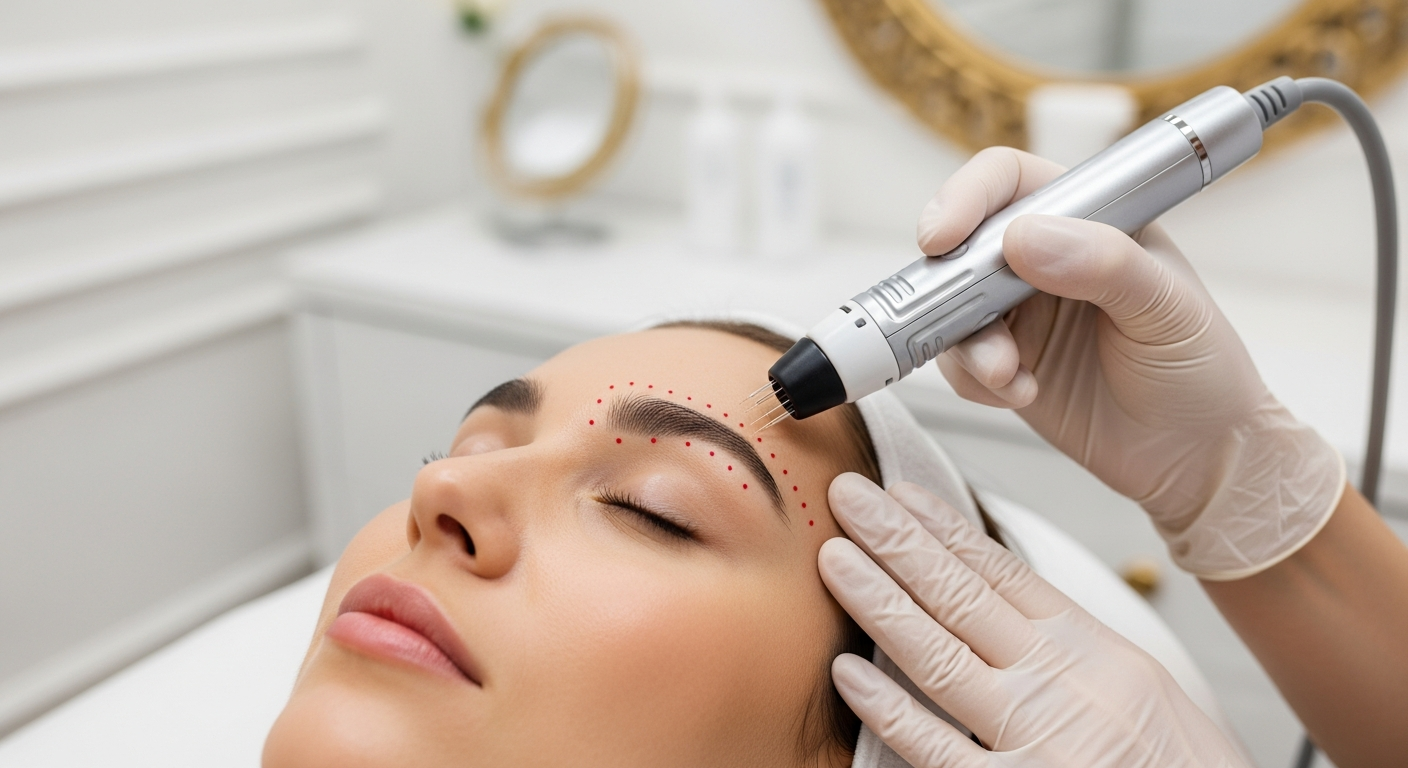
The most widely used first-line scar treatment — fine needles create hundreds of controlled micro-injuries in the scarred skin, triggering the wound healing cascade and new collagen deposition. Over multiple sessions, collagen fills in the depression from the base upward.
Best for: Rolling scars, shallow boxcar scars, overall skin texture improvement
- Sessions: 4–6, every 4 weeks
- Downtime: 1–2 days redness
- Cost: ₹3,000–₹6,000 per session
- Enhancement: Growth factors (GFC) applied post-needling enhances collagen production
2. RF Microneedling (Morpheus8)
Significantly more powerful than standard microneedling. RF energy delivered at the needle tips creates volumetric heating and collagen remodelling at depths of 1–8mm — providing tightening + scar improvement simultaneously. The gold standard for moderate to severe atrophic scars.
Best for: Boxcar scars, rolling scars, combination scar types, scars with skin laxity component
- Sessions: 3, every 4–6 weeks
- Downtime: 2–3 days
- Cost: ₹8,000–₹20,000 per session
3. TCA Cross (Chemical Reconstruction of Skin Scars)
The only effective treatment for icepick scars. A high concentration of TCA (80–100%) is applied with a pointed applicator precisely into the base of individual icepick scars — creating a chemical injury that triggers localised collagen production and progressive filling of the pit from the base upward.
Best for: Icepick scars exclusively
- Sessions: 3–5, every 4–6 weeks
- What to expect: Frosting (white colour) at scar base immediately; heals in 5–7 days; gradual elevation of scar floor
- Downtime: 5–7 days (crust forms, falls off)
- Cost: ₹2,000–₹5,000 per session
4. Subcision
A needle (or blunt-tipped cannula) is inserted under rolling scars and moved back and forth to mechanically break the fibrous bands anchoring the scar to deeper tissue. Once freed, the skin springs upward. The resulting micro-haematoma (blood pool) also stimulates collagen production.
Best for: Rolling scars — the most effective single treatment for this scar type
- Sessions: 2–4, every 6–8 weeks
- Downtime: 3–5 days bruising
- Cost: ₹3,000–₹7,000 per session
- Enhancement: Often combined with microneedling or filler at the same session for maximum result
5. Fractional CO2 Laser
The gold standard for comprehensive scar resurfacing. Ablative fractional laser removes micro-columns of scarred tissue and triggers intense collagen remodelling. Can address multiple scar types in a single treatment — boxcar, rolling, and surface texture simultaneously.
Best for: Moderate to severe mixed-type scars; skin texture improvement; post-CO2 surface quality is the best of any treatment
- Sessions: 3–5, every 6–8 weeks
- Downtime: 5–7 days (significant redness, peeling)
- Cost: ₹10,000–₹25,000 per session
- Important: Must avoid sun exposure for 4–6 weeks before and after; higher PIH risk in darker Indian skin — careful settings essential
6. Punch Techniques
- Punch Excision: Individual icepick scars are excised with a punch biopsy tool and sutured or allowed to heal by secondary intention — converting the scar into a thin linear scar that fades better and responds to laser
- Punch Elevation: The scar base is punched out and elevated to skin level, then held in place with skin glue
7. Dermal Fillers for Scars
Hyaluronic acid filler injected directly under depressed scars provides immediate volumetric lift. Results are temporary (6–12 months) but can be a good option for filling broad depressed areas before or between other treatments. Used particularly for broad, shallow boxcar scars that don't respond adequately to microneedling alone.
8. Chemical Peels
Most effective for PIH (post-inflammatory hyperpigmentation) — the flat dark marks commonly confused with scars. Glycolic, mandelic, and TCA peels at appropriate concentrations significantly reduce PIH and improve overall skin brightness.
Acne Scar Treatment Protocol at Dermessence
Dr. Sukhmani designs a personalised scar treatment protocol for each patient based on:
- Scar types present (icepick, boxcar, rolling, hypertrophic, PIH — or combination)
- Skin type and tone (Fitzpatrick classification — darker skin needs modified laser settings)
- Severity (mild / moderate / severe)
- Patient availability for downtime
- Budget considerations
A typical combination protocol for moderate mixed acne scars:
- Month 1: Subcision (for rolling scars) + TCA Cross (for icepick scars) + skin preparation topicals
- Month 2: RF Microneedling (Session 1)
- Month 3: RF Microneedling (Session 2) + chemical peel for PIH
- Month 4: RF Microneedling (Session 3)
- Month 5–6: Fractional CO2 laser for final surface refinement
Realistic Expectations from Acne Scar Treatment
- Most patients achieve 50–80% improvement in scar appearance with a comprehensive treatment course
- 100% removal of true atrophic scars is not possible — skin does not return to its pre-acne state
- PIH (dark marks) has significantly better prognosis — near-complete resolution is achievable
- Results are gradual — patience over 6–12 months is essential
- Maintaining clear skin after scar treatment (no new acne breakouts) is essential to prevent new scars forming
Acne Scar Treatment Cost Summary
| Treatment | Cost per Session | Sessions Needed |
|---|---|---|
| Microneedling | ₹3,000–₹6,000 | 4–6 |
| RF Microneedling | ₹8,000–₹20,000 | 3 |
| TCA Cross | ₹2,000–₹5,000 | 3–5 |
| Subcision | ₹3,000–₹7,000 | 2–4 |
| Fractional CO2 Laser | ₹10,000–₹25,000 | 3–5 |
| Chemical Peel (PIH) | ₹1,500–₹4,000 | 4–8 |
Related Articles:
→ Acne Scars Treatment Chandigarh
→ Acne Treatment Complete Guide
→ Skin Tightening Guide
→ Chemical Peel Guide
Book a Consultation Today
Get expert dermatology care at Chandigarh's most-trusted skin clinic.
📞 +91-99159-30506